Comping Vocals Without Sucking the Life Out of the Take
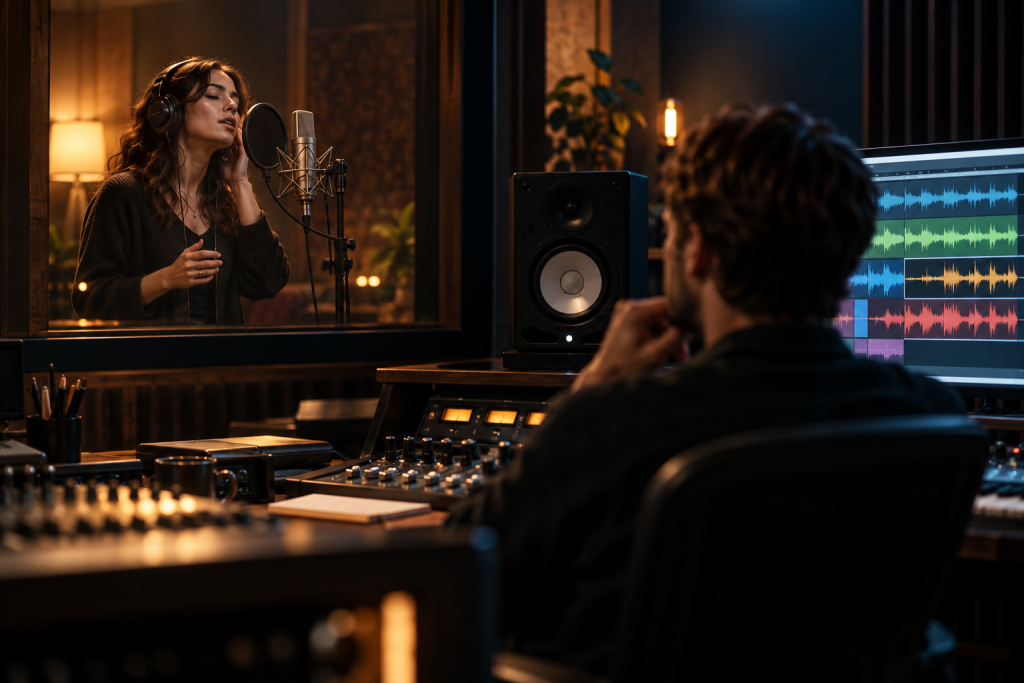
The first time a singer hears the comped vocal, they lean into the talkback and ask: “Is that… me?” Not in a bad way. In the way that means you got close to the truth of the take without sanding off the person who sang it.
Getting there is mostly restraint. Comping goes wrong for one reason: we start fixing instead of choosing. We pick the safe note, the tidy breath, the consonant that lines up on the grid, and we slowly replace a performance with an assembly. The take survives, technically. The life doesn’t.
Some thoughts on how I keep the human in the edit, from a small treated booth where the singer is five feet away and can hear me click.
Comp for intention, not for perfection
Before I touch a single phrase, I listen to the whole pass on phones, no notes, no clicking. I’m listening for where the singer means it. That breath before the last chorus. The slightly flat note they lean into instead of backing off. Those are decisions, not errors, and they get protected.
When you comp, the question for each line isn’t “which take is cleanest?” It’s “which take is the performance?” Those overlap maybe eighty percent of the time. The other twenty percent is where you earn your keep as an editor. A tuned-up, grid-locked, breath-free composite of eight takes can fool a casual listener but it can’t fool the person who sang it. They feel the seams even when they can’t name them.
So I’ll take a slightly rougher phrase if it carries the right emotion. That’s not sloppiness. That’s the whole job.
The breath is not the enemy
I see people strip every breath out of a lead vocal and wonder why it sounds like a synth. Breaths are phrasing. They tell the listener where the singer ran out of air, where they pushed, where they backed off. Remove them all and you remove the body.
What I do instead: keep the breaths from the same take as the phrase they precede. If take three had a great pre-chorus line, take three’s inhale comes with it, even if take five’s was cleaner. Mixing breaths across takes is how you get a vocal that feels like it’s breathing in two places at once.
The only breaths I actually fix are the ugly ones: a wet gasp right on the capsule, a sniff from the singer’s cold, an inhale that lands hard enough to trigger the compressor. Those get faded down or swapped for a cleaner breath from the same session, not deleted.
Watch what compression does to your edit points
Here’s where comping and mixing collide in a way that surprises people. Your edit points are quiet moments, the seams between phrases, and a fast compressor will grab them differently than it grabs sustained notes. If you’ve got a plugin compressing hard on the vocal, every seam becomes a place where the gain reduction resets, and that can sound like the vocal is flinching.
A medium attack and release helps here. Something with a program-dependent character, like a variable-bias or opto-style comp, smears across the seams rather than clamping down on them. The smoother, more natural result comes at the cost of tighter dynamic control, so I keep that kind of compression on the vocal bus and let a cleaner, more surgical compressor, in the FabFilter Pro-C 2 vein, handle the note-level control up front. The Pro-C 2’s clean sound is exactly why it’s good for this: it gives you dynamic control without changing the timbre, which is the last thing you want while you’re still editing.
One habit worth building: comp the whole vocal before you commit to heavy compression. If you compress first, you’re mixing a moving target, and the take that sounded best on phones can suddenly sound wrong once the compressor is leaning on it.
Don’t comp the double as tight as the lead
The double is where most people kill the vibe. If take A and take B are comped from the same source material and tightened to the same grid, they stop being a double and start being a chorus effect. The magic of a real double is timing and pitch differences, the small human drift that makes two voices feel like one wide one.
So I comp the lead for intention and I comp the double for vibe. If the double has a phrase that lands a hair early, I leave it early. That tiny offset is what gives the stereo image depth. Tighten it and you flatten the image. A little imperfection is the realism.
Fix the seam before you reach for the plugin
The instinct when an edit point clicks is to throw a de-esser or a Soothe 2 at it. Sometimes that works. Usually it’s masking the problem. A click at a seam is often a level mismatch between the two takes, or a consonant that landed on opposite sides of the cut. Fix the crossfade, match the room tone, nudge the cut a few milliseconds into the silence, and the click disappears without any processing.
Soothe 2 is genuinely good for what it does, dynamically attenuating harsh frequencies based on the incoming signal rather than dumping a wide multiband cut on everything. But it’s the wrong tool for a mechanical edit problem. Reach for it after the seam is already honest.
Leave the singer’s tuning alone for the first pass
I don’t tune during comping. Tuning changes how a note feels, which changes which take you’d pick, which means you end up comping against a version of the singer that doesn’t exist yet. Comp the raw, decide the performance, then tune the result if it needs it. Plenty of takes don’t.
When the singer’s in the room, this matters even more. Play them the raw comp first. Let them hear what they actually did. Then tune. If you play the polished version first, they never get to weigh in on the performance, and you’ve made a decision for them.
The take you saved is the one that sounds like a person
None of this is about being precious. A messy, unedited, out-of-tune comp isn’t honest, it’s careless. Tightening timing, fixing a clam, cleaning up a bad breath, all fine. The line is between editing that serves the performance and editing that replaces it.
When you’re done, listen to the comp on its own, no compressor, no EQ, no reverb. Does it still sound like someone standing in front of you trying to tell you something? If yes, you comped it right. If it sounds like eight people taking turns, back up a few steps. The performance was already there. Your job was just not to lose it.