How to Coach a Nervous Singer Through Their First Studio Take
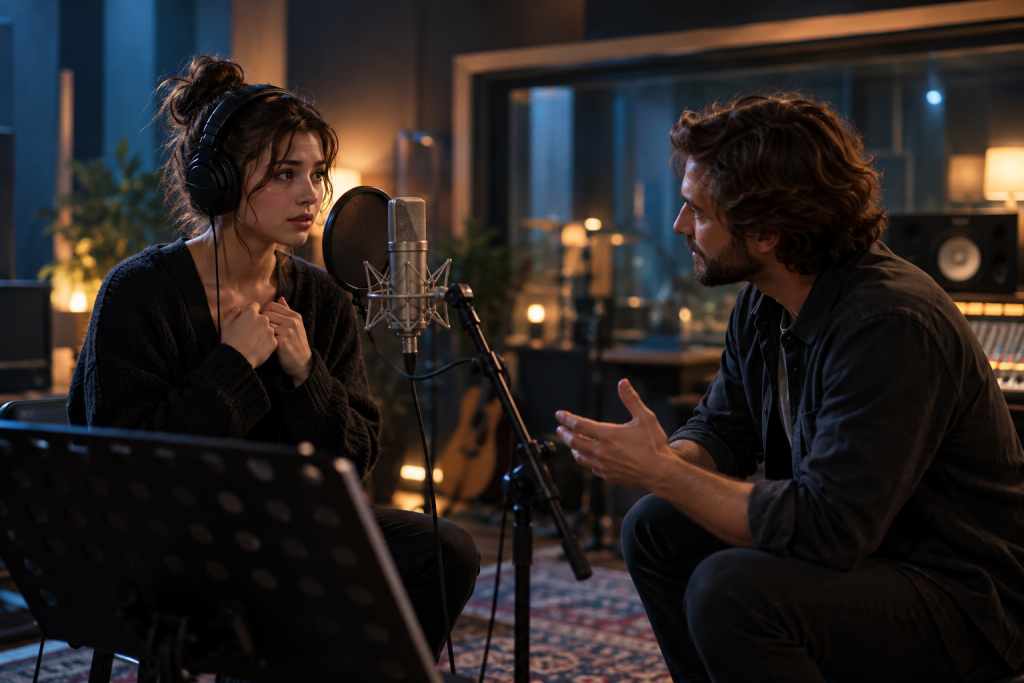
The singer is standing at the mic with both hands wrapped around the coffee cup I gave them, and they haven’t sung a note yet. Their jaw is tight. They keep apologizing for things that haven’t happened. If you’ve tracked more than a handful of vocalists, you know this posture. It’s not a talent problem. It’s a fear problem, and the way you run the next twenty minutes decides whether you get a usable take or a folder full of half-committed whispers.
I’ve been on both sides of this booth. As a coach, I’ve talked plenty of first-timers down off the ledge. As the engineer, I’ve watched good singers shrink because I pushed the wrong button at the wrong moment. Here’s the process I’ve settled into, and the mistakes that cost me sessions before I learned better.
Stop analyzing, start taking
When a singer walks in anxious, the worst thing I can do is jump into technical troubleshooting. The instinct is to fix the mic, adjust the gain, tweak the room, chase the “perfect” setup. Don’t. At least not yet.
There’s a real risk in treating every session as an ongoing engineering puzzle. If I’m constantly second-guessing my choices while the singer waits, they start to read my hesitation as a verdict on their performance. If my setup looks shaky, they assume their voice is the problem. So I’ve learned to make my technical decisions before they arrive and to look like I know what I’m doing even when I’m second-guessing myself.
The same applies to the advice they’ve been collecting. Every nervous singer I’ve worked with has watched twenty YouTube videos about mic technique, breathing, and “the one trick” that makes vocals sound expensive. That endless feed of advice does more harm than good when most of it is contradictory. As one producer noted, the better move is to pick one or two sources and actually apply what they teach instead of chasing the next tip. Same deal in the booth: I give them one or two things to focus on, not eight.
Set the technical stuff so they don’t have to think about it
I want the singer’s brain free to focus on the song. That means I remove every decision from their side of the glass.
Gain staging, for example. Whether I’m evaluating a new mic or tracking a final vocal, I dial in the input so that peaks don’t go above -6dB. That’s a sane working target any time, and it means the singer can sing out without me riding the fader and signaling that they’re “too loud.” If they belt and the meter overloads, they see it and flinch. A little headroom prevents that.
I also mention the pop filter, because it gives them a physical anchor: about 30cm from the mic, give or take. A consistent distance helps with the proximity effect, and it also stops the nervous habit of drifting in and out of the capsule. More than that, telling a singer “stay about here” turns a vague acoustic anxiety into something they can actually control.
Give them a take that doesn’t matter
The single best trick I know: record a throwaway first.
I tell them straight up that this next pass is garbage. I’m not listening, it won’t be used, the file goes in the bin. Then I hit record. The point is to get the nervous energy into the microphone and out of their body, because the first take almost always carries the tension. Let that tension land on a file nobody will hear.
Usually, the second or third pass is dramatically better. Singers need to hear the sound of their own voice in the room after months of practicing alone in headphones. The more I can shorten that adjustment period, the better the real takes will be.
Praise specific, not general
“That was great” is polite but useless. A nervous singer hears it as a lie or a placeholder. What lands is a concrete detail: “Hold that soft breath before the chorus” or “Your tone opened up when you stopped pushing.” Specific feedback proves I’m actually listening, which is what they’re really worried about.
I also separate takes from technique. If a take is weak, I try to name the technique, not the singer: “The second line got tight, let’s smooth that vowel.” That keeps me on their side of the glass instead of sitting in judgment.
Use doubles to build confidence, not to patch
Here’s one that turns anxious singers around. Once I have a solid lead, I’ll suggest a double. Not because I need it to fix anything, but because doubling is a great way to make a scared singer feel like a pro. When you stack a second performance of the same part, you get that thicker, more dimensional sound: one take sits in the center, and two takes give you width and presence.
A nervous singer often relaxes on a double because it feels safer. It’s a texture, not a spotlight. I explain that the slight imperfections in timing and pitch between the two takes are exactly what makes the stack sound human and musical, not robotic. Now their “flaws” are a feature. That reframe alone can unlock a stiff vocalist.
The chorus is where doubles do the most work, so that’s where I aim the energy. One committed lead, one relaxed double, and suddenly the singer hears strength instead of exposure. Vocals that feel exposed in the booth often feel triumphant once they’re layered, and that feedback loop keeps the session moving in the right direction.
Keep the room quiet, and your mouth shut
Acoustics matter more than most singers realize. A poorly treated room lets reflections and room resonance smear the vocal and mess with the tone, and that’s true whether you’re in a home setup or a small booth. That’s why I spend ten minutes on treatment and background noise before they arrive. A quiet, controlled room also keeps the singer calm, because they don’t have to hear their own anxiety bouncing off the walls.
And the big one: I keep talking to a minimum during the actual take. No commentary. No sighing. No clicking. My job while the transport is rolling is to disappear. I’ll move for a re-take or a note, but between those moments, silence is the professional move.
What I’ve stopped doing
I don’t chase someone else’s template. The instinct to apply a “vocal preset” or copy a YouTuber’s exact chain is a trap, because what works for one voice and one song falls apart on the next. Mix engineers don’t apply settings blindly, they listen first and then shape the sound with purpose. My coaching works the same way. I listen to this singer, then choose a technique to help this take land. There’s no such thing as a magic preset, and no magic one-liner that fixes a nervous singer. There’s just attention, patience, and a plan.
The singer who walked in apologizing usually leaves standing a little taller. Not because the take was flawless, but because nobody made them feel reckless for trying. That’s the whole game.