Picking a Mic for a Singer Who Won’t Stand Still: Practical Options and Placement Notes
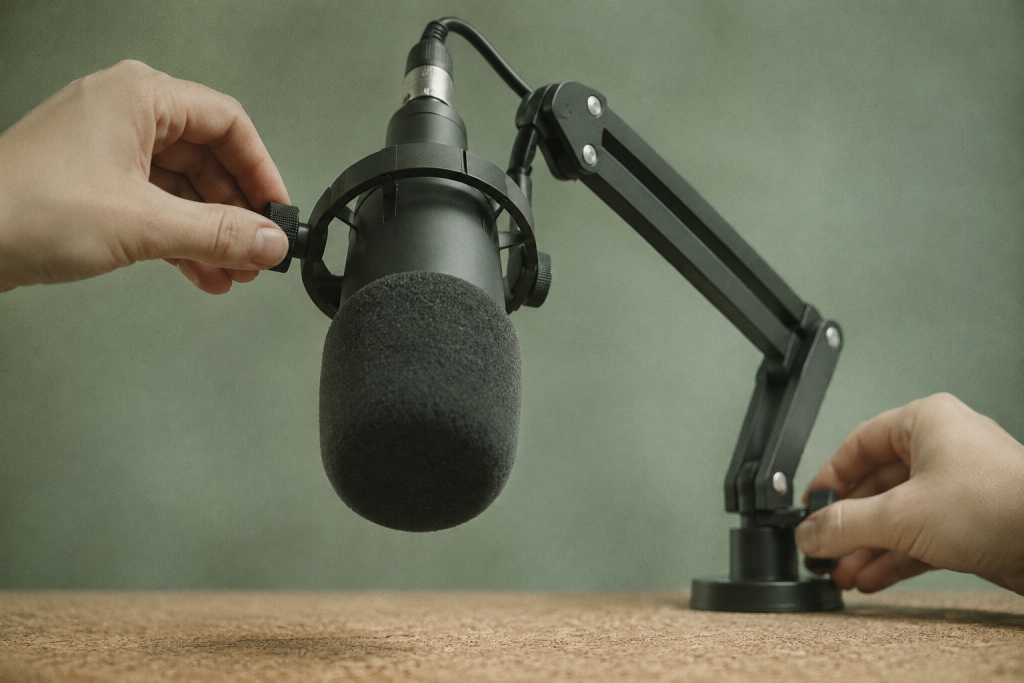
For a singer who moves, a dynamic mic beats a condenser almost every time, and it’s not close. I’ve watched too many sessions fall apart because someone handed a swaying, gesturing vocalist a large-diaphragm condenser and then spent the next hour chasing the sweet spot. Buy for the movement, not the spec sheet.
The entire decision comes down to that one line. The rest of this is about what to actually put in front of them and where to aim it. I’m approaching this as someone who spends more time coaxing performances out of nervous, physical singers than I do comparing frequency plots, so that’s the lens here.
Why dynamics handle movement better
A condenser wants you at a consistent distance. It’s sensitive, it hears the room, and it rewards a singer who plants their feet and stays put. The moment someone starts rocking back and forth, or gestures on the big note, or turns their head to check the lyric sheet, that consistency evaporates. You get level swings and a shifting proximity effect that no compressor setting cleans up gracefully.
A dynamic is more forgiving. Its tighter pattern and lower sensitivity mean a singer can move a little and the recording survives. It also tucks the room further back, which matters enormously if you’re tracking in a space that isn’t treated. In a reflective room, the mic picking up less of that reflection is often a bigger win than any upgrade in capsule quality.
I’m not going to pretend dynamics sound “better” in absolute terms. A good condenser on a still singer captures detail a dynamic simply won’t. But the singer in front of you is the variable, and you record the singer you have.
What I’d actually put in front of them
There’s no need to overthink the shortlist. What you want is contrast, not five versions of the same mic from different brands. A handful of genuinely different characters tells you far more about how a voice behaves than a wall of near-identical options.
- A classic moving-coil dynamic (the handheld kind built for stages) for the most mobile singers and the most untreated rooms.
- A broadcast-style dynamic for a warmer, fuller low end with strong off-axis rejection.
- A large-diaphragm condenser for the takes where they genuinely settle and you want detail.
- One brighter mic and one darker mic so you hear how the voice responds to air versus low-mid weight.
That’s a shortlist built for information, not for a leaderboard. The point is to hear the voice through different characters.
Testing without a proper shootout
You don’t need a whole afternoon. An hour is plenty for five or six mics. Give each one ten to fifteen minutes and record the same phrase every time, so your ears are comparing the mic and not the performance.
Do it properly, though. Pop filter about 30cm out. Set gain so peaks stay under -6dB. And record something realistic: a chorus lead, a couple of doubles, a couple of harmony lines, roughly twenty seconds of material. That’s enough to hear how a mic holds up when you start layering, which is where weak choices fall apart.
Here’s the part most people skip. A raw take can sound fine on its own and then crumble the moment you EQ and compress it. If you can, run the same take through your normal chain before you decide. Send the takes to someone who mixes for a living if you want a second opinion. The true character of a mic shows up in the mix, not in the solo’d raw file.
Placement notes for a singer who won’t stand still
This is where I earn my keep as a coach rather than an engineer. You can’t fix movement with gear alone, so build the room around the movement.
Set the mic slightly high and angled down toward the mouth. Singers naturally drift, and a downward angle catches them whether they’re leaning in or rocking back. Give them a pop filter they can use as a physical anchor, something to keep their body at a workable distance without you nagging.
Mark the floor. A strip of tape where their feet belong does more for consistency than any compressor. Most singers will happily stand on a mark if you frame it as “this is where the mic sounds best,” not “stop moving.”
Watch the hands. A singer who gestures on the emotional line will swing the mic stand or knock the pop filter. If that’s happening, a handheld-style dynamic on a short stand, or even in their hand, solves it. Some performances are simply better captured when the singer is allowed to hold the thing.
And keep a second position ready. If they drift left, have a second mic or a second stand position so you’re not fighting them mid-take. A quick swap between verses beats a ruined pass.
The part about the room nobody wants to hear
Acoustic treatment changes a home recording more than a microphone upgrade will. That’s true whether the singer is still or not, but it bites harder with a moving singer because movement means the mic hears the room from shifting angles. Fix the reflections and background noise first, and every mic on your shortlist starts sounding closer to its potential.
I get it. Treatment is boring and doesn’t photograph well. But a modest dynamic in a controlled space will out-record a lovely condenser in a bare, echoey bedroom every time the singer so much as turns their head.
A quick word on budget
Spend where the raw sound gets shaped. A strong mic into a modest interface will usually beat a cheap mic into an expensive one. The mic is the front of the chain and everything downstream inherits its problems. If a bad capture can’t be fixed in the mix, no plugin is going to save it later.
None of this requires a fortune. It requires choosing a mic that suits the singer’s movement first and their tone second, then testing it honestly, in the room, on a realistic take. Do that and you’ll stop fighting the performance and start capturing it.